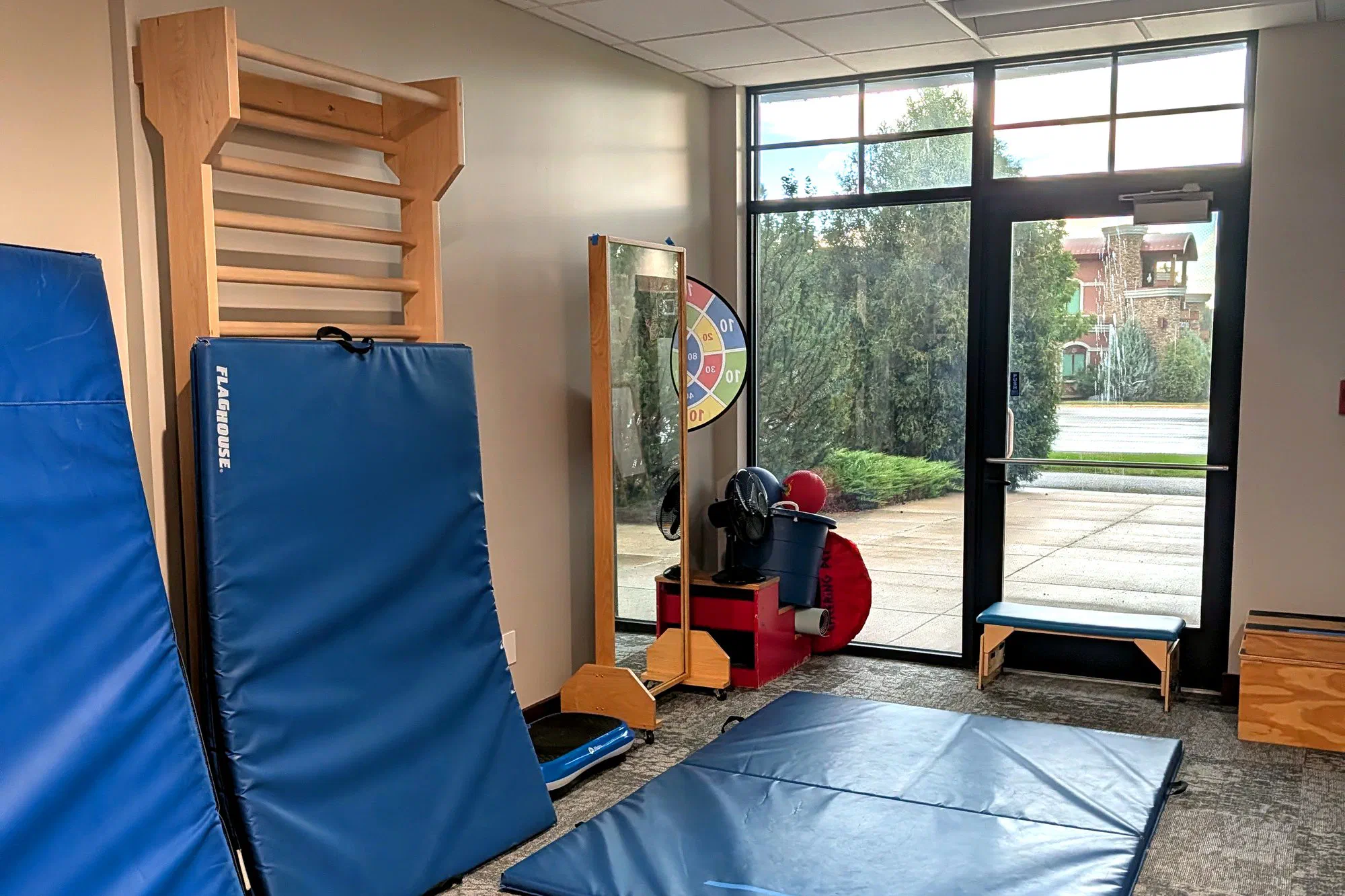
Pediatric Occupational Therapy in Bozeman, MT
Pediatric occupational therapy — OT, for short — helps children build the skills their day actually requires: managing sensory input, using their hands well, dressing and feeding themselves, and staying regulated enough to learn and play. Root Pediatrics provides occupational therapy for children in Bozeman, Montana, from birth to 18 — one-on-one, through play, with parents welcome in the room.
Occupational therapy is often the discipline families have heard least about, and its name does not help. It is not about jobs. A child’s “occupations” are playing, eating, dressing, writing, and getting through a school day — and OT works on the underlying capacities those depend on.
What Pediatric OT Actually Addresses
- Sensory processing — a child overwhelmed by noise and texture, or one who seeks constant movement and pressure.
- Fine motor skills — grasp, hand strength, scissors, fasteners, and handwriting that keeps pace with school.
- Self-care independence — dressing, feeding, bathing, and the routines that let a child do more alone.
- Attention and executive functioning — starting a task, sticking with it, organizing steps, handling transitions.
- Self-regulation — recognizing frustration or overwhelm and having something to do about it.
- Feeding, where food refusal is sensory rather than mechanical — coordinated with speech therapy when swallowing is involved.
- Hand and upper-limb recovery after a childhood injury or surgery.
How This Differs from Our Other Pediatric Services
Root Pediatrics offers physical, occupational, and speech therapy, and families often are not sure which one they need. In short:
- Pediatric physical therapy works on the large-motor system — walking, balance, strength, and motor milestones.
- Pediatric occupational therapy — this page — works on senses, hands, regulation, and daily-living skills.
- Pediatric speech therapy works on communication, and on chewing and swallowing.
If you are not sure, that is a normal place to start. The pediatric therapy overview explains how the three fit together, and an evaluation will tell you which is the right fit — including if the answer is more than one, or none of them.
This page is about children. If you are looking for occupational therapy for yourself or another adult — hand therapy, ergonomics, return-to-work, or trauma-informed care — that is our adult occupational therapy service.
What to Expect
- Evaluation (60 minutes) — your concerns and priorities, structured observation of your child at play, and assessment of sensory, fine motor, coordination, and self-care skills.
- Findings in plain language — what we see, what is driving it, and what therapy would target first.
- Goals set with you — written around what is hard at home and at school, not a generic developmental checklist.
- Home strategies — specific things to try between visits, taught to you during the session.
- Periodic re-assessment — progress reviewed together, with goals adjusted as your child grows.
Take the First Step
If something about your child’s day is consistently harder than it should be, an evaluation is a low-cost way to find out why. Call or text (406) 219-5388 or request an appointment — Root Therapy and Wellness, 1283 N 14th Ave, Suite 101, Bozeman.
Core Techniques We Use
Sensory Integration Activities
Movement, deep pressure, and graded sensory input in a purposeful sequence — building tolerance and regulation rather than avoiding what is hard.
Fine Motor & Handwriting Work
Grasp patterns, hand and finger strength, in-hand manipulation, letter formation, and the endurance to write for as long as class requires.
Therapeutic Play
Goal-directed activities that look like play and are not — every game targets a specific motor, sensory, or regulation goal.
Daily Living Skills Practice
Real practice with dressing, fasteners, utensils, and self-care routines, broken into steps a child can actually build on.
Self-Regulation Strategies
Practical tools a child can use themselves — recognizing their own state and knowing what helps — taught alongside strategies for parents.
Feeding & Oral Motor Support
For sensory-based food refusal and texture aversion, working alongside speech therapy where chewing and swallowing are also involved.
Hand Therapy for Kids
Post-injury and post-surgical hand and upper-limb care adapted for growing bodies, including splinting where it is needed.
Parent Coaching
What to try at home, what to expect, and what to stop worrying about — the part that makes progress carry over between visits.
Who Benefits from This Service?
Why Choose Root Therapy and Wellness?
Full one-on-one sessions
Your child works with their occupational therapist for the whole visit — never handed off to an aide partway through.
OT, PT, and speech in one place
Sensory, motor, and communication goals interact. When your child sees more than one of our therapists, they plan together rather than in parallel.
Goals from your family, not a checklist
We start from what is actually hard at home and at school — getting dressed before the bus, surviving the cafeteria, finishing a worksheet.
Parents welcome in the room
You are welcome to stay for the session and learn the strategies as your child does — and either way, we walk you through what to practice before you leave, so the work continues the other six days of the week.
Knowledgeable PT's and very helpful in planning a program to get my balance problems resolved. I definitely recommend them.— G.H. Google review · April 2026
Frequently Asked Questions
What ages do you see for pediatric occupational therapy?
What is pediatric occupational therapy, exactly?
How is this different from pediatric physical therapy?
My child has not been diagnosed with anything. Can they still be seen?
What does the first visit look like?
What is sensory processing, and why does it come up so often?
Can OT help with handwriting?
Do you work with schools?
Do we need a referral?
Conditions We Treat with This Service
Last updated