What Our Patients Experience

↓ Pain

Less back and radiating pain over the first weeks of care

↓ Radiating Pain

Pain eases out of the arm or leg and back toward the spine — a sign the nerve pressure is letting up

↓ Surgery

Many disc herniations settle without surgery

↑ Function

Getting back to lifting, work, and daily activities

A Disc Herniation Doesn't Have to Mean Surgery

Most disc herniations get better with structured rehab. The key is finding what eases your symptoms and building real strength and mobility around the disc.

Back or neck pain at the level of the herniation Pain that travels down an arm or leg Numbness or tingling in the arm or leg Weakness in certain muscles (a dropping foot, weak grip) Pain that's worse with sitting, bending, coughing, or sneezing Pain that eases back toward the spine in certain positions

Why Disc Herniations Happen

When symptoms linger long after an injury should have healed, deeper dysfunctions keep discomfort signals flowing.

Repeated Bending & Lifting

Bending and twisting under load — lifting, ranching, trades work — gradually wears down the disc's outer wall.

A Sudden Injury

A hard lift, twist, or impact (a skiing fall, a car accident) can herniate a disc all at once.

Natural Disc Wear

Discs dry out and weaken with age — though these changes often show up on scans in people with no pain at all.

Stiff Hips & Weak Core

When the hips and mid-back don't move well, the low-back discs take on load they aren't built for.

A herniated disc — often called a slipped disc — is when the soft center of a spinal disc pushes through its outer wall, often pressing on a nearby nerve and causing back or neck pain plus pain that travels down an arm or leg. Most happen in the low back or neck, and most get better with structured rehab.

Herniated Disc Treatment in Bozeman — Most Get Better Without Surgery

Hearing “you have a disc herniation” sounds alarming. It usually isn’t. Research consistently shows that most disc herniations get better with conservative care — often shrinking on a follow-up scan without ever being touched surgically. The key is treatment that eases the pressure on the nerve, finds the positions and movements that calm your symptoms, and rebuilds how much load your back can handle.

At Root Therapy and Wellness in Bozeman, disc care happens in full 1-on-1 sessions, with hands-on treatment, nerve mobilization, and a steady build back to strength.

Low-Back vs. Neck Disc Herniations

Low-back herniations (most common in the lower lumbar spine) usually cause:

  • Low back pain, often with sciatica running down one leg
  • Numbness, tingling, or weakness down the leg
  • A dropping foot in severe cases

Neck herniations usually cause:

  • Neck pain with pain running into the arm
  • Numbness, tingling, or weakness in the arm or hand
  • Weak grip in severe cases

Both respond well to the same general approach: find what eases your symptoms, calm the irritated area, free up the nerve, and rebuild strength.

What to Expect at Your First Visit

  1. Comprehensive evaluation (60 minutes) — your history, a nerve screen, and a check of which positions and movements ease or aggravate your symptoms.
  2. Diagnosis and plan — the positions that calm your symptoms, and a realistic timeline.
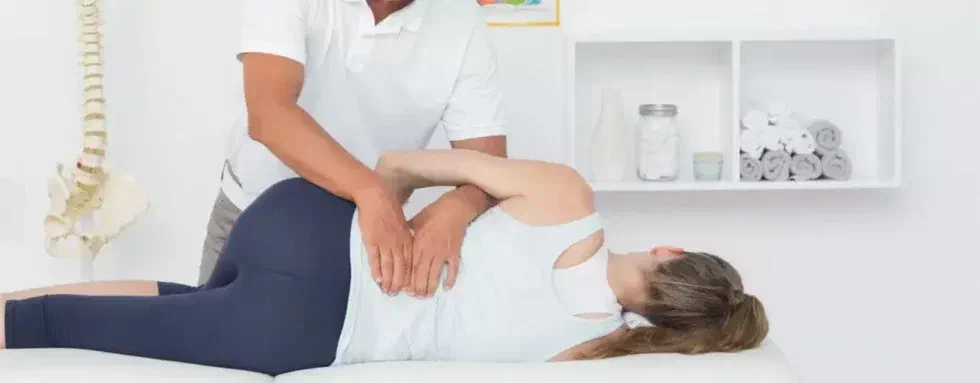
  3. Hands-on treatment that same visit — targeted exercises, manual therapy, and nerve mobilization.
  4. Home program — daily exercises that are key to recovery.
  5. Re-assessment every few visits, adjusting as your symptoms and strength improve.

Take the First Step

Most disc herniations get better with structured rehab — and the earlier you start the right care, the faster the recovery. Request an appointment today — most patients are seen within the same week.

Our Treatment Approach

  • Exercises That Ease Nerve Pressure — Targeted movements and positions that take pressure off the nerve and calm your symptoms.
  • Joint Mobilization — Gentle hands-on work for the spine to restore motion and ease guarding.
  • Nerve Mobilization — Gentle nerve-gliding movements to free up an irritated nerve.
  • Progressive Loading & Hip Mobility — Building hip and mid-back mobility and core endurance so the disc isn't asked to do work it isn't built for.
  • Soft-Tissue Work — Easing the tight, guarded muscles around the spine.

How Root Is Different

Not all therapy is created equal. Here's why our patients get better results with Herniated Discs.

Conventional PTRoot's Approach Root Therapy
Session ModelShared between an aide and the therapist; brief direct PT timeA full 1-on-1 session with your therapist
ApproachGeneric stretches and core exercisesFind what eases your symptoms, calm the irritated area, and rebuild load tolerance
TechniquesStandard exercise protocols and modalitiesManual therapy, nerve mobilization, and progressive strengthening
AssessmentInitial eval, then occasional reassessmentOngoing reassessment as your symptoms change
FocusPain reductionLasting relief and a full return to activity

Hands-On Every Visit

Skilled manual therapy and nerve mobilization in every session.

Find What Eases It

We find the positions and movements that calm your symptoms — and build from there.

Build Real Capacity

Beyond symptom relief — the hip mobility, mid-back mobility, and core endurance that keep the disc from being overloaded.

5.0 out of 5
I have had an incredible experience at Roots. The woman at the front desk is so helpful and kind. My PT Kristi had helped me rehab my knee and hip so that I can take my dog on hikes again and climb my stairs without pain. I feel heard and seen at my appointments. My time in the office is incredibly helpful. My home exercises are simple but very effective so I actually do them. I also work with Lindsey who is a PT assistant and she has helped my knee with cupping and other manual work. Lindsey has helped me build my strength, balance, and I’m stating to work on endurance/ cardio. I feel like I’m in safe and thoughtful hands at Roots- highly recommend!!!
— A.W. Google review · June 2026
5.0 out of 5
I have been to many physical therapists for various injuries over my lifetime and this clinic is the absolute best. I feel like for the first time we are creating a plan to rehabilitate my injury but also figuring out how to avoid injuries in the future and create a strong body for my future. Tracey and Kristi both have shown me exercises I will do for life. I am so happy I chose Root.
— H.W. Google review · August 2025
5.0 out of 5
The staff are friendly, easy to talk to and helpful. Kezia explained to me how scar tissue from surgery can keep the muscles in a tight position. Even with physical therapy the muscles will revert back to the tight position even while keeping up with physical therapy exercises. This is new to me and I can feel everything loosening up. I'm excited to see how much this can help.
— S.G. Google review · March 2024

Frequently Asked Questions

Will my herniated disc heal without surgery?
For most people, yes. Research consistently shows that the majority of disc herniations get better with conservative care over a couple of months. Even large herniations often shrink on follow-up scans without surgery. Surgery is usually only considered for worsening nerve problems or after a few months of care that hasn’t helped.
How long until I feel better?
Disc-related pain often eases over weeks to months as the herniation settles and the surrounding muscles strengthen; severe cases take longer. One of the earliest signs of progress is centralization — pain moving back toward the spine and out of the arm or leg. Your therapist checks for that at each visit.
Can I keep working with a herniated disc?
Usually yes, with some adjustments. We help you figure out what to avoid (often long sitting and heavy lifting while bent) and what’s safe. For ranchers, trades workers, and desk workers alike, we tailor the advice to your actual demands.
Why does my leg pain sometimes pull back toward my back?
That’s a good sign — it usually means the pressure on the nerve is easing. We help you find the positions and movements that make it happen, so you can calm a flare yourself.
Does an MRI showing a disc herniation mean I need surgery?
No. Disc bulges and herniations show up on scans in plenty of pain-free people too — they aren’t always the source of the pain. Decisions should be based on your exam plus the imaging, not the imaging alone. Most herniations seen on an MRI get better with conservative care.
When is surgery actually needed for a herniated disc?
Surgery is usually considered for a few specific situations — a rare emergency involving the nerves to the bladder and bowel, worsening weakness like a dropping foot, or a few months of significant, unrelenting disability despite good care. We coordinate with spine surgeons across Bozeman Health and OrthoMontana when a consult makes sense.
Can I exercise with a herniated disc?
Yes — and you should. The right specific exercises often ease symptoms a lot. Walking, gentle mobility work, and gradually building strength are safe and helpful. We guide what to do and what to hold off on based on your situation.
Do I need a referral for disc herniation PT in Montana?
No — Montana is a direct-access state, so you can schedule PT without a referral. Some insurance plans require one for coverage; we verify at your benefits check.
How is treatment different for a neck disc versus a low-back disc?
Same ideas, different anatomy. Neck herniations often cause arm pain, numbness, and grip weakness; low-back herniations cause leg pain, sciatica, and foot weakness. Both respond well to the right exercises, hands-on care, and nerve mobilization for the specific level involved.

Last updated

Diagnosed with a disc herniation?

Most disc herniations get better without surgery when treatment eases the pressure on the nerve. Hands-on PT in Bozeman. No referral needed for most plans in Montana.

Most insurance accepted, Medicare welcome · Serving Bozeman, Belgrade, Manhattan, Four Corners & the Gallatin Valley · Mon–Fri 8am–5pm

Prefer we reach out to you?

Leave your details and we’ll get back to you — or call us now at (406) 219-5388.

We’ll only use this to get back to you — see our privacy policy.

Call Now Text Us

Request a callback

Leave your details and we’ll get back to you.

We’ll only use this to get back to you — see our privacy policy.