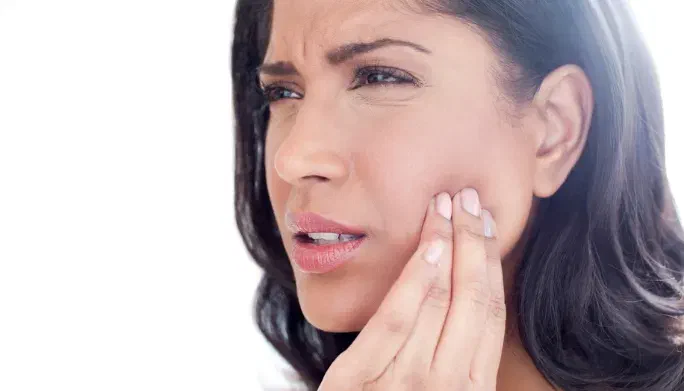
What Our Patients Experience

↓ Pain

Less jaw and facial pain over the first weeks of care

↑ Opening

More pain-free mouth opening

↓ Clicking & Locking

Fewer joint sounds and locking episodes

↑ Function

Getting back to eating, talking, sleeping, and yawning comfortably

Jaw Pain Affects Everything

Eating, talking, sleeping — jaw problems touch every part of your day. Skilled, hands-on therapy that treats the jaw and neck together is what produces lasting change where standard care often hasn't.

Jaw pain or tenderness with chewing, opening, or clenching Clicking, popping, or grinding sounds when you open your mouth Jaw locking — open or closed — or a limited mouth opening Headaches, especially at the temples or one-sided Ear pain, ringing, or fullness without an ear infection Facial pain or tenderness in the cheek or temple Neck stiffness alongside jaw symptoms Clenching or grinding — daytime, nighttime, or both

Why TMJ Pain Persists

Most jaw pain has more than one cause. Treatment that addresses only one piece misses the rest.

Muscle Tension & Clenching

Daytime clenching and nighttime grinding keep the jaw and temple muscles tight — the most common cause of jaw pain.

Jaw Joint Problems

A shifted disc, an irritated joint, or arthritis in the jaw joint produce clicking, locking, and joint-type pain.

Posture & Neck Strain

Forward head posture and a stiff upper neck change how the jaw works — the neck and jaw are closely linked.

Stress

Stress drives unconscious clenching and keeps muscle tension up — addressing it is part of good jaw care, not optional.

Injury & Whiplash

Direct jaw injury, dental work, and whiplash from a car accident can start or worsen jaw problems.

TMJ disorders — also called TMD, short for temporomandibular disorder — involve pain, clicking, locking, or limited movement of the jaw joint and the muscles around it. Treatment works best when it addresses the jaw, the upper neck, and the posture and stress that drive symptoms — not the jaw alone.

TMJ Care in Bozeman — Treating the Jaw and Neck Together

Jaw problems don’t live in isolation. The jaw joint, the upper neck, and the muscles that connect them share nerves, movement, and pain patterns. Most people with jaw problems have a neck component, most people with chronic neck pain have a jaw component — and the people who plateau with single-area care almost always need both addressed.

At Root Therapy and Wellness in Bozeman, jaw care happens in full 1-on-1 sessions, with hands-on care every visit and coordination with your dentist when it helps.

Why TMJ Pain Persists

Most jaw pain has more than one cause working together — clenching and grinding, tension in the jaw and neck muscles, the position of your head and neck, and stress. Sometimes the joint itself is involved, which is what causes the clicking or locking. Because there’s usually more than one thing going on, treating only the jaw rarely resolves it for good — which is why we look at the jaw, the neck, and your daily habits together.

What to Expect at Your First Visit

  1. Comprehensive evaluation (60 minutes) — your history, a jaw exam (motion, sounds, and tender spots), a neck exam, and a posture check.
  2. Diagnosis — a clear read on what’s driving your jaw pain.
  3. Hands-on treatment that same visit — external jaw work, neck care, and (with your consent) gentle work inside the mouth.
  4. Self-care strategies — jaw rest position, clenching awareness, sleep position, and exercises.
  5. Re-assessment every few visits, tracking your mouth opening, pain, and clicking over time.

Take the First Step

Jaw pain that lingers tends to pile on compensations — clenching habits, posture changes, poor sleep. Request an appointment today — most patients are seen within the same week.

Our Treatment Approach

  • Gentle Jaw Work (Inside and Out) — Hands-on work for the jaw muscles and joint — including gentle work inside the mouth, with your consent, to reach muscles we can't get to from outside.
  • Neck Care — Hands-on work for the upper neck, almost always part of jaw care because the two are linked.
  • Jaw Retraining — Tongue and jaw position and clenching awareness to lower the daily strain.
  • Posture & Workstation Tips — Easing the forward-head posture that feeds jaw and neck tension.
  • Stress & Clenching Coaching — Practical strategies for clenching awareness, plus coordinating with your dentist on a night guard.

How Root Is Different

Not all therapy is created equal. Here's why our patients get better results with TMJ / Jaw Pain.

Conventional PTRoot's Approach Root Therapy
Session ModelShared between an aide and the therapist; limited direct PT timeA full 1-on-1 session with your therapist
ApproachGeneric neck and jaw exercises; rarely inside the mouthTreat the jaw and neck together — they're linked
AssessmentJaw-only or neck-only; rarely bothA jaw joint and muscle exam, a neck exam, and a posture and stress check
TechniquesStandard exercise handouts and modalitiesGentle jaw work (inside and out), neck care, and retraining
FocusSymptom suppressionLasting relief by addressing all the contributors

Hands-On Every Visit

Gentle jaw work (with your consent), external work, and neck care — every session.

Treat the Neck Too

The jaw and upper neck are closely linked. Treating both is what unlocks recovery for people who've plateaued.

Coordinate With Your Dentist

We work alongside your dentist on bite, night guard, and clenching management.

5.0 out of 5
I have had an incredible experience at Roots. The woman at the front desk is so helpful and kind. My PT Kristi had helped me rehab my knee and hip so that I can take my dog on hikes again and climb my stairs without pain. I feel heard and seen at my appointments. My time in the office is incredibly helpful. My home exercises are simple but very effective so I actually do them. I also work with Lindsey who is a PT assistant and she has helped my knee with cupping and other manual work. Lindsey has helped me build my strength, balance, and I’m stating to work on endurance/ cardio. I feel like I’m in safe and thoughtful hands at Roots- highly recommend!!!
— A.W. Google review · June 2026
5.0 out of 5
I have been to many physical therapists for various injuries over my lifetime and this clinic is the absolute best. I feel like for the first time we are creating a plan to rehabilitate my injury but also figuring out how to avoid injuries in the future and create a strong body for my future. Tracey and Kristi both have shown me exercises I will do for life. I am so happy I chose Root.
— H.W. Google review · August 2025
5.0 out of 5
The staff are friendly, easy to talk to and helpful. Kezia explained to me how scar tissue from surgery can keep the muscles in a tight position. Even with physical therapy the muscles will revert back to the tight position even while keeping up with physical therapy exercises. This is new to me and I can feel everything loosening up. I'm excited to see how much this can help.
— S.G. Google review · March 2024

Frequently Asked Questions

Can physical therapy actually help TMJ problems?
Yes — research strongly supports conservative, hands-on therapy as a first-line treatment for most jaw problems. Hands-on care (inside and outside the mouth), exercise, posture work, and treating the neck consistently improve pain, opening, and function. Therapy addresses the muscle and joint drivers that a splint or medication alone can’t address.
Will you work inside my mouth?
With your consent, yes. Gentle work inside the mouth is one of the most effective jaw techniques — it reaches muscles that can’t be treated from the outside. We always explain what we’re doing, wear gloves, and go at your comfort level. Many people say this is what finally made the difference.
What causes TMJ problems?
Usually a combination — daytime clenching, nighttime grinding, a stiff upper neck, posture, stress, and sometimes an injury. Most people have several of these at once, so treating only one rarely lasts. Our exam finds the specific mix for you.
What's the connection between my neck and my jaw?
They’re closely linked — both in how they move and in how their nerves connect. Most people with jaw problems have a neck component, and many people with chronic neck pain have a jaw component. Treating both is often what unlocks recovery when single-area care has stalled.
How long does TMJ treatment take?
Many people see meaningful improvement early in their care. Long-standing jaw problems with several contributors take longer. We set clear goals at your first visit and track them.
Can TMJ cause headaches and ear pain?
Absolutely — it’s one of the most common patterns. Jaw problems often cause temple and one-sided headaches, ear pain, ringing, ear fullness, and facial pain — none of which involve an infection. Treating the jaw often clears these up when the connection is correctly identified.
Should I keep wearing my night guard?
Generally yes — and we coordinate with your dentist on it. A night guard protects your teeth from grinding and can ease some jaw symptoms. PT and dental care work together, not instead of each other.
My jaw locks up. Is that something therapy can fix?
Often yes, depending on the cause. A jaw that’s locked with limited opening frequently responds well to therapy, especially when treated early. Long-standing locking takes more time; surgery is reserved for the cases that don’t respond to thorough conservative care.
Do I need a referral from my dentist or doctor?
No — Montana is a direct-access state, so you can schedule jaw therapy directly. Some insurance plans require a referral for coverage; we verify at your benefits check.

Last updated

Jaw pain, clicking, or headaches?

Hands-on TMJ care in Bozeman — gentle jaw work, neck co-treatment, and a plan that addresses all the contributors. Coordinated with your dentist when needed. No referral needed for most plans.

Most insurance accepted, Medicare welcome · Serving Bozeman, Belgrade, Manhattan, Four Corners & the Gallatin Valley · Mon–Fri 8am–5pm

Prefer we reach out to you?

Leave your details and we’ll get back to you — or call us now at (406) 219-5388.

We’ll only use this to get back to you — see our privacy policy.

Call Now Text Us

Request a callback

Leave your details and we’ll get back to you.

We’ll only use this to get back to you — see our privacy policy.